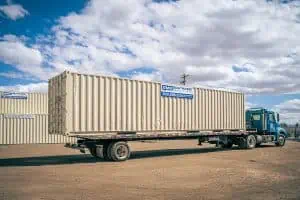
Leveling shipping containers is a great first step to ensure that your container continues to provide secure, convenient storage for years to come.
When a shipping container becomes unlevel, it can present you with major challenges. That’s why it’s important to get ahead of the issue and ensure that your container is always placed on a level foundation.
In this blog, we’ll detail what you need to know about how to level shipping containers, how to open a shipping container if it’s become unlevel and explain the benefits of placing your container on a stable and level foundation.
Table of Contents
Click on the following links to go to a specific section of the article.
- How Does a Container Become Unlevel?
- How to Open an Unleveled Container’s Doors
- Creating a Concrete Foundation for Your Container
- How to Use Dunnage to Level Shipping Containers
- Gravel Pad Foundations
- The Benefits of Supporting Your Container Storage
- Do Modified Containers Need a Foundation?
- Summary
How Does a Container Become Unlevel?
Before discussing how you can prevent containers from becoming unbalanced, it makes sense to first explain how containers become unlevel in the first place.
When you load a container, the weight of your storage may be uneven. If you’re storing construction materials, for instance, you may store commonly used lightweight materials up front, while heavier materials go in the back.
When this happens, the uneven weight applies pressure to the ground, causing the container frame to twist. In the worst circumstances, this can result in the container doors becoming immobile, as they’re pinned against the container’s door headers. This can make it nearly impossible to get inside your container from the outside.

How to Open an Unleveled Container’s Doors
Opening the doors of an unleveled container can be a challenge. The doors can be stiff, and the hinges may require lubrication. To alleviate the pressure on your container’s doors, you’ll need to examine the container to see if the issue is caused by an unlevel container or faulty gasket.
If you’re a rental customer of ours, give your container sales representative a call, and we can assist you in dealing with this issue. For those curious about solving these problems for containers they own, read on!
If all corners of a container are touching the ground and are level, then you may need to use a lubricant like WD-40 or Fluid Film to loosen the hinges, latches and locking cams of your container.
Let soak for a few minutes, then attempt to open the doors again.
Be careful when opening container doors, as cargo could have shifted since the time you last opened them. Open the doors slowly and listen for sounds of your storage shifting inside before proceeding further.
If the doors are still stuck, you should jack the container up so that the doors are level. A bottle jack is a great tool to use when vertically jacking a container. These should be used in addition to a leveling bracket that should be attached to the bottom corner casting. When the container is jacked to a balanced level, place wooden supports on the bottom of the container, and remove the jack.
This should make it easier to open your unleveled container’s doors.
Creating a Concrete Foundation for Your Container
You can decrease the likelihood of your container becoming unbalanced by setting up a level concrete foundation to rest your container on.
In most situations, this won’t be necessary. However, if you plan to use the container for a specific purpose outside of storage, adding a foundation may be a good idea.
How to Use Dunnage to Level Shipping Containers
Adding wood dunnage to the bottom of your container can be a great way to provide support on a budget.
When using wood, you must be careful about it decaying and rotting over time. Because of this, pair pressure-treated wood dunnage with a gravel foundation to prevent the wood from quickly deteriorating.

Gravel Pad Foundations
Because of gravel’s unique texture, water can move through it quickly without pooling. While a dirt foundation might turn slippery and muddy with enough rain, the same conditions wouldn’t affect the stability of a container resting on gravel.
This is because gravel spreads out the water across a larger area, preventing it from pooling.
The Benefits of Supporting Your Container Storage
As with most things in life, the longevity of your container storage depends on your maintenance upkeep. If you leave your container in a muddy area, loaded unevenly, don’t be surprised if your storage starts to sink into the earth!
To ensure that your storage will always remain accessible, reinforce your container with leveling supports and a solid foundation. This makes it easier for you to open your container doors and access the storage inside.
Do Modified Containers Need a Foundation?
While some modified containers will require a concrete foundation, not every modified container requires one. While we recommend supporting multi-container projects with a foundation, container modifications that are smaller in scale or are only intended to stay in one place for less than a year don’t require it.
If you think your modified container may encounter problems with staying level, support it with a foundation. This may be a more pressing demand in a location without level space.

Summary
Leveling shipping containers is essential for maintaining storage functionality and accessibility over time. By understanding how containers become unlevel and taking proactive measures—such as using dunnage, gravel pads, or a concrete foundation—you can significantly reduce the risks associated with uneven weight distribution and environmental factors.
Regular maintenance and strategic planning will not only help you avoid potential challenges when accessing your stored items but also extend the lifespan of your container. Whether you’re using your container for storage or a modified purpose, a solid foundation is the key to a hassle-free experience.
By investing the time and resources now, you will enjoy the convenience and security of your shipping container for years to come.
Interested in getting a quote for a container rental, purchase or modification? Contact us today, and a dedicated container sales representative will provide you with a quote and address any questions you may have.